
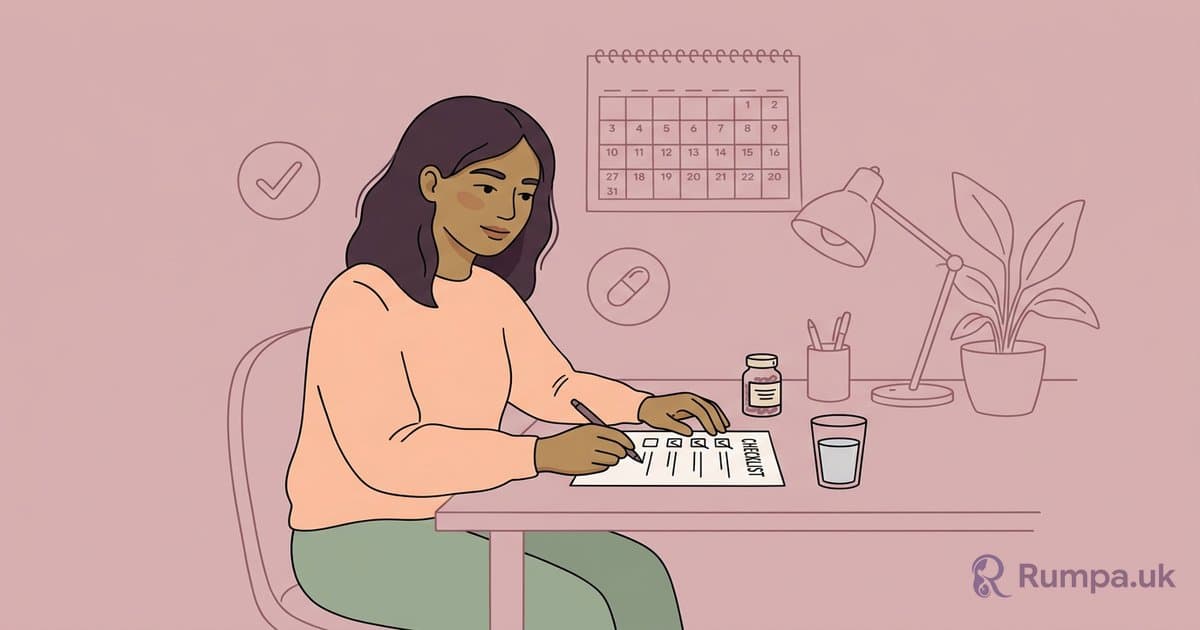
If you're starting to plan a baby, a pre-conception health checklist gives you three months of small, evidence-based steps that meaningfully raise your odds of a healthy pregnancy. It isn't a homework guilt-trip and it isn't a barrier to passing before you can try. It's a clinical roadmap that most couples will look back on as the most useful three months they ever spent.
Patients who come to me at this stage usually want one document covering all of it: the supplements, the bloods, the vaccines, the weight piece, what to ask the GP or OB-GYN, and what their partner should be doing. This pre-conception health checklist is that document. Both UK NHS and US pathways are covered alongside each other.
How Far in Advance to Start Pre-Conception Care
Three months is the standard guidance, and the biology supports it. A mature egg has been developing for around 90 days before ovulation. Sperm production cycles run roughly 74 days. So the choices you make today affect the gametes that meet in three months.
A common reader question, "how long before TTC to start pre-conception care," collapses to: three months for most couples, six months if there's PCOS, diabetes, thyroid disease, prior loss, or a complex medication picture.
The ACOG prepregnancy counseling guidance and the CDC preconception care guidance both centre this 3-month window. [src] [src]
Book a Pre-Conception Visit (NHS GP or US OB-GYN)
Get this visit on the calendar early. It anchors the rest of the checklist.
In the UK: book a GP appointment and flag "pre-conception planning." Expect a BMI check, blood pressure, smear status check, rubella and varicella history, and a medication review. Bring every supplement and herbal product you take, including ones you bought online.
In the US: book a preconception visit with your OB-GYN or family medicine provider. Confirm what your insurance covers as preventive care under the ACA. Bring the same medication list.
Both pathways: write your questions before you go. Twenty minutes disappears quickly and a written list keeps you from leaving without the bloods you wanted. [src]
Folic Acid and Other Pre-Conception Supplements
Folic acid pre-conception is the single most evidence-based supplement, and timing matters more than dose for most women. See our deep dive on when to start folic acid before TTC for the full breakdown.
The short version:
- Folic acid 400 mcg daily for most women, started at least one month (ideally three) before TTC.
- Folic acid 5 mg daily (prescription) if you have a previous pregnancy affected by neural tube defect, BMI over 30, Type 1 or 2 diabetes, anti-epileptic medication, sickle cell disease, coeliac disease, or a family history of NTD.
- Vitamin D 10 mcg (400 IU) daily in the UK year-round per NHS guidance. US ACOG baseline is 600 IU/day; supplementation up to 1000-2000 IU is reasonable if you have low sun exposure or darker skin. [src]
- Iodine 150 mcg/day in the US per ACOG. UK relies on dietary iodine (dairy, fish, eggs); flag risk to your GP if you avoid these foods. [src]
- Omega-3 DHA: supportive but optional. Worth considering if your diet is low in oily fish.
Skip "fertility blend" supplements with unverified herbal ingredients. They're not regulated to medical standards and can interact with prescribed medication.
Pre-Pregnancy Blood Tests Worth Asking For
The core pre-pregnancy blood tests panel I'd want on most patients before TTC:
- Full blood count and ferritin (iron stores)
- TSH and free T4 (thyroid)
- HbA1c (glucose, especially if PCOS or family history of diabetes)
- Vitamin D
- Rubella IgG (immunity check)
- Varicella IgG (chickenpox immunity)
- Hep B, HIV, syphilis (standard infectious screen)
For PCOS or irregular cycles, add: fasting insulin, lipid panel, and AMH (if you're considering IVF timing or want a reserve estimate).
South Asian readers: ferritin and vitamin D are very commonly low. A haemoglobinopathy screen (for thalassaemia or sickle cell carrier status) is sensible if family origins suggest possible carrier status. Your partner may need the same screen.
Partner labs: infectious screen (hep B, HIV, syphilis), haemoglobinopathy screen where indicated, and a semen analysis if there's any TTC history, advanced age, or known risk factor. [src]
For region-specific test details, see pre-pregnancy blood tests in the UK and pre-pregnancy blood tests in the US.
Weight, Activity, and Body Composition
Honest, non-shaming framing matters here. BMI between 18.5 and 25 is associated with the highest natural fertility rates. Outside that range, fertility is still very possible; the odds shift, they don't close.
For women with PCOS, even a 5 to 10% change in body weight (up or down depending on your starting point) is well-evidenced to restore ovulation in a meaningful subset of patients. See our piece on how weight affects pre-conception fertility for the deeper look.
Practical targets aligned with NICE CG156 fertility guidance and NHS/ACOG physical activity recommendations: [src]
- 150 minutes per week of moderate-intensity activity (brisk walking, cycling, swimming).
- Two sessions per week of strength training. Supports insulin sensitivity, which matters if PCOS or borderline glucose.
- Avoid: crash diets, very low-calorie regimens, very long endurance cardio that disrupts cycles. None of these help fertility, all of them slow it.
Optimising Chronic Conditions Before You Conceive
If you have a chronic condition, this is the section that earns the three-month buffer.
- Diabetes: target HbA1c below 48 mmol/mol (6.5%) before TTC. Switch to safer pregnancy-compatible medications (often metformin and insulin); discontinue ACE inhibitors and statins.
- Thyroid: aim for TSH ideally below 2.5 mIU/L pre-conception per most fertility-aware endocrinology guidelines. Underactive thyroid significantly affects ovulation and early pregnancy.
- Hypertension: swap ACE inhibitors or ARBs for pregnancy-safe options like labetalol or nifedipine before TTC.
- Mental health: never stop SSRIs abruptly. Safety in pregnancy is generally good for most agents, but stopping cold turkey is risky. Plan the conversation with your prescriber three months ahead.
- Epilepsy: review of teratogenic risk medication (especially sodium valproate) is essential. Switching requires specialist neurology input.
Vaccines, Infections, and Dental Care
Catch-up before TTC saves you from preventable risks once pregnant, when many vaccines can't be given.
- Rubella and varicella: confirm immunity by blood test. If non-immune, get MMR (rubella) and/or varicella vaccines and wait one month before TTC.
- Tdap (US) / dTaP (UK): offered in pregnancy; have a recent dose on file pre-TTC.
- Influenza: annually, including during pregnancy.
- COVID-19: discuss current recommended schedule with your GP or OB.
- Cervical screening: make sure your smear is up to date before TTC. [src]
Dental cleaning matters more than people expect. Periodontal disease is linked to adverse pregnancy outcomes, and a routine clean and check-up before TTC closes that loop. Pregnancy gingivitis is real and easier to manage from a clean baseline.
Lifestyle: Alcohol, Smoking, Caffeine, Cannabis
Three months out is the sweet spot for lifestyle changes, far enough ahead to embed habits, close enough that motivation holds.
- Alcohol: no safe amount once TTC; reduce to none in the pre-TTC window.
- Smoking and vaping: both partners stop. Vaping isn't a safe alternative for fertility; nicotine affects egg quality and sperm parameters either way.
- Caffeine: cap at 200 mg/day (roughly two 200ml cups of coffee).
- Cannabis and recreational drugs: stop before TTC. Cannabis affects sperm motility and can disrupt ovulation regularity.
- South Asian context: tobacco chewing (paan, gutka, supari mixes) is common and not always recognised as smoking-equivalent. It is. Quit timeline is the same as cigarettes.
Pre-Conception Health for Your Partner
Partner pre-conception health gets skipped in roughly half the resources I read. It shouldn't. Sperm regenerates every ~74 days, so three months of changes actually show up in the sample that meets your egg.
The basics:
- Reduce alcohol to under 14 units per week, ideally less.
- Stop smoking and vaping. Both affect motility and DNA fragmentation.
- Manage weight. Obesity affects testosterone and sperm count.
- Avoid heat exposure to the testes: hot tubs, prolonged sauna use, laptop on lap.
- Boxer vs brief: doesn't matter as much as marketing suggests.
- Folic acid for him? Modest evidence supports 400 mcg plus zinc in a basic men's multivitamin.
- Semen analysis: see when your partner should get a sperm analysis for the timing. [src]
For the deeper version, see male fertility pre-conception tips.
Stopping Birth Control and Cycle Tracking
Fertility return after contraception varies by method, but most women cycle within weeks to a few months. Track two to three full cycles before stressing the timing of intercourse, you'll learn your own pattern faster than any app can teach you.
When to seek help:
- Under 35: after 12 months of regular unprotected sex.
- Over 35: after 6 months.
- Immediately: if known PCOS, endometriosis, prior pelvic surgery, irregular cycles longer than 35 days, or significant family history of early infertility.
For the deeper read see how long after stopping the pill to conceive.
Ready for a personalised fertility plan?
Book a one-to-one consultation. We'll review your history and map the next concrete step.
NHS vs US Pathway
A Realistic 3-Month Pre-Conception Timeline
A simple way to sequence the work:
Month 1
- Book the GP or OB-GYN pre-conception visit.
- Start folic acid (400 mcg or 5 mg as advised) and vitamin D.
- Medication review with your prescriber.
- Baseline bloods (FBC, ferritin, TSH, HbA1c, vitamin D, rubella, varicella, infectious screen).
- Partner: start his own three-month window if not already.
Month 2
- Vaccine catch-up (MMR, varicella, flu as appropriate, dTaP refresh).
- Dental clean and check-up.
- Embed lifestyle changes: alcohol down to zero, smoking/vaping stopped, caffeine under 200 mg/day.
- Partner: semen analysis if indicated.
Month 3
- Track two to three cycles to learn your fertile window.
- Finalise any medication switches.
- Mental health check-in. Pre-TTC anxiety is normal; address it before pregnancy adds to it.
- Stop contraception per the plan you and your provider agreed.
What This Means for You
A pre-conception health checklist isn't a barrier you have to pass before trying. It's the most useful three months of work most couples will ever do for their future child. The big levers are folic acid timing, optimising chronic conditions, vaccine status, weight and activity, and a partner who's running his own three-month window in parallel.
If this resonates and you'd like a personalised plan that fits your medical history and timeline, a 30-minute consultation is the fastest way to compress this into one conversation.
Ready for a personalised fertility plan?
Book a one-to-one consultation. We'll review your history and map the next concrete step.
FAQ
What should I do before trying to conceive if I'm short on time?+
If you can't do the full three months, do the highest-impact 30 days: start 400 mcg folic acid today (5 mg if you have diabetes, BMI over 30, or prior NTD), stop alcohol and smoking, book a GP visit, and get rubella and varicella immunity confirmed. The rest can be worked on in parallel with TTC.
Do I really need pre-pregnancy bloods if I feel fine?+
Yes, if you can access them. Iron deficiency, thyroid issues, and rubella non-immunity are often silent and easier to fix before conception than during. If NHS or insurance won't cover the full panel, even a basic FBC, ferritin, TSH, HbA1c, and rubella IgG covers most of the high-yield findings.
What about my partner's pre-conception health?+
Sperm regenerates over roughly 74 days, so his three-month window matters. Key levers: reduce alcohol, stop smoking and vaping, manage weight, avoid heat exposure to the testes, take a basic multivitamin with folic acid and zinc, and get a semen analysis if there's any TTC history or concern.
I'm over 35. Does the checklist change?+
Not really, but the timeline tightens. Use the full three months, get bloods done early, and don't wait 12 months before seeking fertility input if conception isn't happening. The 35+ rule is: investigate after 6 months of trying, not 12.
I have PCOS. Anything I should add?+
Yes. Add an HbA1c, fasting insulin, lipid panel, and consider AMH. Strength training twice weekly supports insulin sensitivity. Discuss with your GP whether inositol or metformin fits your picture. See our TTC tips for women with PCOS for the deeper version.
What if I had a miscarriage? When can I start the checklist?+
You can restart pre-conception care as soon as you feel physically and emotionally ready. Medically, most couples can try again after one normal cycle. Bloods worth reviewing afterwards include TSH, HbA1c, and vitamin D, and a discussion with your GP about whether further investigations apply to your situation.
References
Citations referenced inline above link to their primary sources (NHS, NICE, CDC, ACOG, ASRM, peer-reviewed journals).