
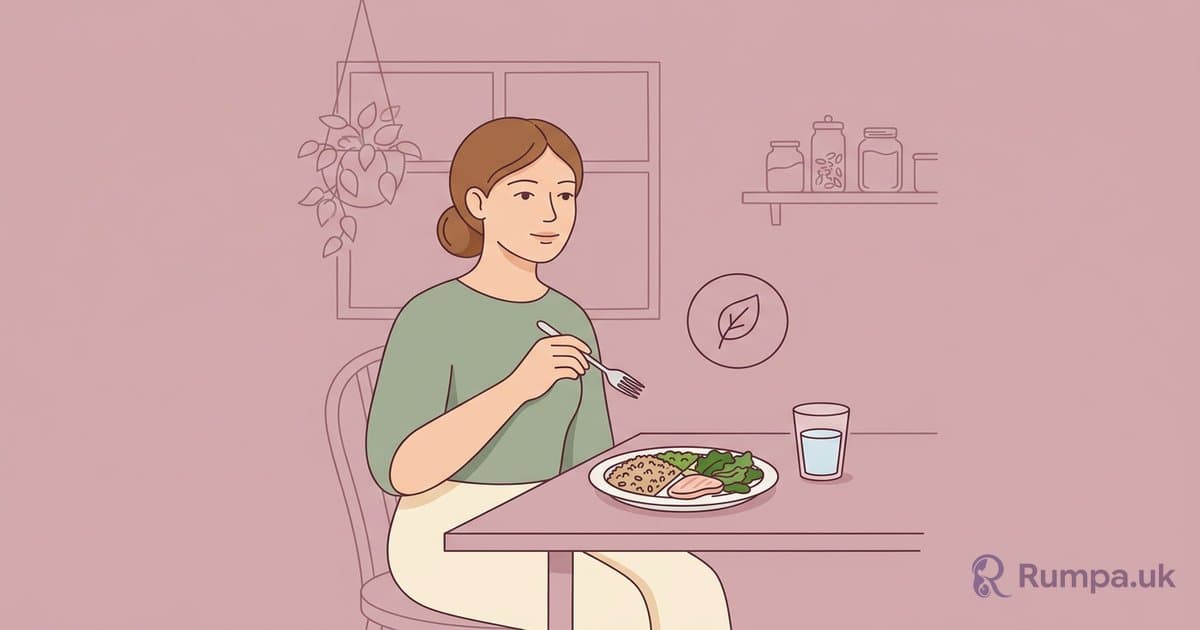
A PCOS diet to conceive is not a strict food list, it's an eating pattern that lowers insulin spikes and supports ovulation. The 2023 International PCOS Guideline puts lifestyle first, before medication, for women with PCOS who are TTC. [src]
This post sets out what to put on the plate, what to limit, and what a realistic day looks like, with swaps for UK and South Asian kitchens so it actually fits your life. For the broader treatment picture, start with the full PCOS fertility treatment options.
Why Diet Matters for PCOS Fertility
The mechanism in one paragraph: most women with PCOS have insulin resistance, which drives the pancreas to release more insulin, which signals the ovary to make more androgens, which disrupts follicle selection and stalls ovulation. Lowering the insulin spikes lowers the androgens, and ovulation often returns. For the full mechanism walk-through, see the PCOS insulin resistance and fertility link.
The trial signal worth knowing: a randomised controlled trial showed roughly 24.6 percent ovulatory cycles on a low-GI diet versus 7.4 percent on a normal-GI diet over 3 months in women with PCOS. [src] The effect is real, not miraculous, and it builds over time.
Eggs take roughly 90 days to mature from primordial follicle to the antral stage that ovulates. Dietary change shows up in cycle pattern over weeks to months, not days. Patience is part of the plan.
Diet is a lever, not a cure. Pair it with the right testing and, where indicated, medication. The pattern is what works; perfection on any single day doesn't.
What Low-GI Eating PCOS Actually Means in Real Meals
Glycaemic index (GI) is a measure of how fast a carbohydrate raises blood glucose. High-GI foods spike it; low-GI foods raise it slowly. For PCOS, the goal is to flatten the curve so insulin doesn't have to surge to bring glucose back down.
The simple rule: protein plus fibre plus healthy fat with every meal. That combination flattens the glucose response regardless of what carbohydrate is on the plate.
The everyday building blocks of low-GI eating PCOS look like:
- Whole grains over refined. Oats, barley, brown or wholegrain basmati, wholewheat roti, sourdough or seeded wholegrain bread.
- Pulses, beans and lentils as anchors. Daal, chickpeas, kidney beans (rajma), black beans, butter beans. Low-GI, high-fibre, decent protein.
- Fruit with skin, low-GI choices. Berries, apples, pears, oranges, kiwi.
- Non-starchy vegetables in volume. Spinach, broccoli, cauliflower, peppers, okra, courgette, aubergine.
- Oily fish 2 to 3 times a week. Salmon, sardines, mackerel for omega-3.
- Nuts, seeds, olive oil, avocado for healthy fats.
A Mediterranean or DASH-style pattern works well in PCOS for the same reason: high fibre, mostly plants, moderate protein, healthy fats, low ultra-processed intake. [src]
Foods to Avoid with PCOS
"Avoid" overstates it. Aim for everyday patterns, not perfection.
The foods to avoid with PCOS as daily staples (occasional fine) are:
- Sugar-sweetened drinks. The single biggest insulin-spike lever for most people: soft drinks, sweetened coffees, fruit juices, sweetened lassi.
- Refined carbs eaten alone. White bread with jam, sugary cereal in milk, plain pasta without protein or fat alongside, white rice in large portions on its own.
- Trans fats and heavily fried foods. Packaged bakery, repeatedly reheated frying oil.
- Ultra-processed snack foods. Sweet biscuits, sweetened breakfast bars, crisps as a meal substitute.
- Alcohol while TTC, per NHS pre-pregnancy guidance. [src]
"Avoid" doesn't mean "never." A piece of birthday cake at a wedding is not the problem. The daily can of cola alongside lunch is. Aim for the everyday pattern.
A Sample PCOS Fertility Meal Plan Day
This is one realistic day, not a prescription. Adjust portions to your hunger, activity, and any medication you're on.
Breakfast. Greek yoghurt with berries, a tablespoon of chia, a small handful of walnuts, cinnamon. Or savoury: two eggs with sauteed spinach on wholegrain or seeded toast.
Mid-morning if needed. An apple with a small handful of almonds.
Lunch. Lentil and spinach daal, half a cup of brown or wholegrain basmati rice, a side salad dressed with olive oil and lemon. Or a chicken and chickpea salad bowl with roasted vegetables and olive oil.
Afternoon. Hummus with carrot, cucumber and pepper sticks. Or a hard-boiled egg with a piece of fruit.
Dinner. Grilled salmon, roasted vegetables (broccoli, peppers, cauliflower), quinoa or a small sweet potato. Or a stir-fry with tofu or chicken, lots of vegetables, and a small portion of brown rice.
Evening if hungry. A small bowl of berries with full-fat yoghurt.
So what to eat to ovulate with PCOS in practice? This kind of plate, most days, for at least 12 weeks. The cycle change shows up in months 2 to 4 for most patients I see.
South Asian readers: the pattern translates. Swap the rice portion smaller, add more daal and vegetable sabzi alongside, choose wholewheat roti over white. Replace daal one or two nights a week with rajma or chana for variety. Sweets at celebrations rather than daily. The pattern is what matters, not the cuisine.
For more practical TTC moves around the diet pattern, see PCOS and TTC tips that help.
Supplements That Earn Their Place
Most "PCOS fertility supplement stacks" sold online are oversold. The handful with evidence behind them:
Folic acid 400 mcg daily, starting at least 1 month before TTC and continuing through the first 12 weeks of pregnancy. The dose increases to 5 mg if BMI is over 30, in diabetes, in a personal or family history of neural tube defects, or on certain medications. NHS standard.
Vitamin D 10 mcg (400 IU) daily for most UK residents, particularly between October and March, or year-round if sun exposure is limited or skin tone is darker. Check serum 25(OH)D if you're not sure.
Omega-3 from oily fish 2 to 3 times a week first; supplement (EPA + DHA) if you don't eat fish.
Inositol (myo plus D-chiro, 40:1 ratio) has modest but reasonable evidence in PCOS ovulation, particularly for those who don't tolerate metformin. For the head-to-head, see inositol vs metformin for PCOS fertility.
What doesn't earn its place: most "PCOS detox" stacks, megadose vitamin protocols, and anything marketed as a "hormone reset." If the website claims it cures PCOS, close the tab.
FAQ
Is keto the best PCOS diet?+
No. Ketogenic diets can lower insulin in the short term, but they're hard to sustain, limit fibre, and the long-term fertility evidence is thin. A low-GI Mediterranean or DASH-style pattern has stronger evidence and is far more sustainable.
Can dairy worsen PCOS?+
There's no good evidence that dairy worsens PCOS in most women. Some find skim or low-fat dairy triggers more bloating or acne; full-fat dairy in moderate amounts is fine for most. If you suspect a personal sensitivity, an elimination trial of 4 to 6 weeks is reasonable.
Do I need to be gluten free?+
Only if you have coeliac disease or a confirmed non-coeliac gluten sensitivity. Going gluten free without need usually means trading wholegrains for refined gluten-free products that raise blood glucose faster.
How long until diet changes affect ovulation?+
Most patients see cycle changes between weeks 6 and 16. Eggs take roughly 90 days to mature, so 3 months is a reasonable first review point.
Can a PCOS diet replace metformin?+
Sometimes, in milder insulin resistance and when the pattern is well established. In moderate or severe insulin resistance, diet and metformin together work better than either alone. The decision belongs with your doctor and your labs.
References
Citations referenced inline above link to their primary sources (NHS, NICE, CDC, ACOG, ASRM, peer-reviewed journals).
A PCOS diet to conceive is steady and unglamorous: low-GI carbs, protein and fibre with every meal, oily fish, fewer sugary drinks, a folic acid and vitamin D base. Give the pattern 12 weeks before judging it. If you'd like a tailored PCOS fertility nutrition plan that fits your labs, your medication and your kitchen, that's what we work through in a consult.
Ready for a personalised fertility plan?
Book a one-to-one consultation. We'll review your history and map the next concrete step.